Class B or Class N? Choosing a tabletop autoclave for your clinic
EN 13060 defines three types of small steam steriliser. Which one you need depends on what you sterilise and whether instruments are stored wrapped. A practical guide for clinics, dental practices and day-surgery units.
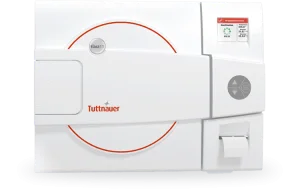
Small steam sterilisers look alike from the outside, but they do not all remove air from the chamber in the same way — and air removal decides which instruments a cycle can sterilise reliably. The European standard EN 13060 sorts the cycles of tabletop autoclaves into three types: B, N and S. This guide explains the difference and what to check before you buy.
Why air removal matters
Steam sterilises by condensing on every surface of the load and releasing its heat there. Air trapped inside a hollow instrument, in a pouch or between layers of a wrap keeps steam away from those surfaces, so they may not reach sterilising conditions even when the chamber display shows the correct temperature. How completely a cycle removes air is therefore the main difference between the cycle types.
The three cycle types in EN 13060
| Type | How air is removed | Loads it is designed for |
|---|---|---|
| B | Fractionated pre-vacuum: a vacuum pump alternates vacuum and steam pulses before the sterilising phase; the load is then dried under vacuum | All load types described in the standard: wrapped and unwrapped, solid, porous and hollow instruments, including narrow lumens (hollow load A) |
| N | Gravity or steam flushing, without a vacuum phase | Unwrapped solid instruments only |
| S | Specified by the manufacturer | Unwrapped solid instruments plus the specific loads the manufacturer states and has tested, for example certain wrapped or hollow items |
One steriliser can offer several cycles. Many Class B units also have a faster cycle for unwrapped instruments; what matters is that each cycle is labelled with the load types it has been tested for, and that your staff choose the right one.
Which type does your practice need?
- You sterilise handpieces, cannulas or other hollow instruments: choose Class B. A Class N cycle cannot be relied on to remove air from lumens.
- You store instruments wrapped or in pouches until they are used: choose Class B. Wrapped loads need active air removal and effective vacuum drying, so that packs come out dry and stay sterile in storage.
- You process textiles or other porous materials: choose Class B.
- You only sterilise solid, unwrapped instruments that are used straight after the cycle: a Class N cycle can be sufficient, but you lose flexibility if your instrument sets change.
Dental practices, dermatology and aesthetic clinics, ophthalmology, ENT, podiatry and day-surgery units nearly always handle hollow or wrapped instruments, which is why Class B is the usual choice in clinical settings. Class N units are mainly found where only simple solid instruments are processed.
Chamber size and throughput
Most tabletop models have chambers of roughly 16 to 28 litres. Size the steriliser for your busiest session rather than for an average day:
- count the trays or pouches per cycle and the number of cycles you need per session;
- compare the complete cycle time including drying — the sterilising phase itself is only part of it;
- check the usable tray dimensions against your longest instruments and cassettes.
Water, power and installation
Small sterilisers run on distilled or demineralised water. Poor water quality leaves deposits on instruments and in the chamber and is a common cause of faults; EN 13060 sets limits for the feed water, and the manufacturer's instructions state what the unit needs. Decide whether you will fill a built-in reservoir by hand or connect a water treatment unit for a direct supply and a drain. Check the electrical requirement against the outlet and circuit — in the UAE the supply is 230 V, 50 Hz — and leave the ventilation space around the unit that the instructions specify.
Routine tests and records
A sterile result cannot be seen on the instruments, so it is demonstrated with tests and cycle records. With a Class B steriliser, plan for:
- an air leakage (vacuum) test, usually daily before the first cycle;
- an air removal and steam penetration test at the start of each day — a Bowie-Dick type test for porous loads, or a hollow-load process challenge device (Helix test) for lumened instruments;
- chemical indicators in or on each pack, and biological indicators at the interval set by your infection-control policy;
- a record of every cycle — from a built-in printer, a USB export or network logging — kept together with the identification of the load.
Your licensing authority's infection-control standards determine which records you must keep. Ask for them before you choose a model, so that the steriliser's documentation and data logging match what inspectors will look for.
Questions to ask the supplier
- Which cycle types does the unit offer, and which loads has each cycle been tested for under EN 13060?
- What is the full cycle time, including drying, for a typical wrapped load?
- Which water supply options are available, and what water quality is required?
- How are cycle records stored and exported?
- Are installation, validation and user training included, and who carries out preventive maintenance and periodic checks?
- Which registration and conformity documents can be provided for the model?
Tabletop sterilisers in our range
Our steam sterilisers include, for example, the Elara series — Class B tabletop autoclaves with a built-in steam generator and 19 or 28 litre chambers — and the 2540 EKA series, a 23 litre Class S unit with closed-door active drying. Tell us what you sterilise in a typical session and we will recommend a model and cycle set-up.
Need advice on a specific model?
Our product specialists can compare options, confirm documentation and prepare a quotation.